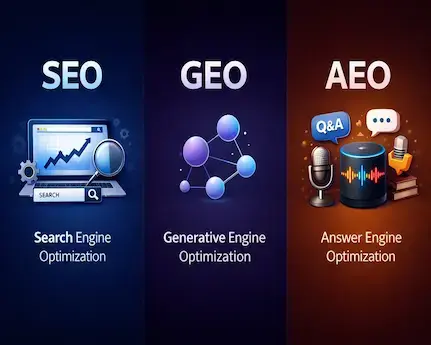
What is SEO? A Complete Beginner’s Guide

The world now runs online, and it is not sufficient to have a website. There are millions of websites that are competing, and when people do not see your site in the search engines, your online presence does not exist. It is here that SEO is involved. SEO assists websites to be ranked higher in search engines such as Google, hence allowing users to locate the right information, products, or services. Be it a business, blogging, or brand management, to grow in the long term, you need to know the basics of SEO.
What is SEO, and Why is it Important?
Search Engine Optimization (SEO) refers to the act of making a site to be ranked higher in search engine results pages (SERPs). Search engines go through millions of web pages when users search online to ensure that they do not give irrelevant and unreliable information. SEO makes the search engines get to know more about your content and correlate it to what users are searching.
The higher your website is ranked, the more people can see it. This will result in more visitors to the site, more awareness of the brand, and more chances of turning visitors into customers. Compared to the paid ads, SEO is a cost-effective digital marketing strategy, since it targets long-term growth and long-term sustainability of outcomes.
How Search Engines Work
To be aware of SEO, one needs to have knowledge of how search engines work. Search engines are performed in three primary processes, namely crawling, indexing, and ranking. Crawling is the process of search engine bots searching websites to find new or updated material. This information is stored and organized in a huge database, which is referred to as indexing. Ranking is the process of deciding on the relative positions of the pages depending on the relevance, quality, and user experience.
SEO can assist in optimizing your site in all three steps, making your content simple to discover and comprehend and outranking your rival websites.
Search Intent as a Factor in SEO.
Search intent is one of the key factors of contemporary SEO. Search intent can be described as the motivation behind the query of a user. An individual who is searching for the best running shoes will probably be comparing products, whereas an individual who is searching to buy running shoes online will be willing to buy the product.
Understanding search intent enables you to produce content that directly addresses the search query the user is making. With content that matches the purpose of the search, the search engines view this as more useful and hence better positioned, and consumer satisfaction.
What is Organic Traffic?
Organic traffic can be defined as those people who visit your site as a result of unpaid search engines. The said form of traffic is among the primary objectives of SEO since it attracts users who are currently seeking information pertinent to your content.
Organic traffic is desirable as it is very desirable, regular, and reliable. This will increase the level of engagement, time spent on your website, and level of conversion in the long run because users are more likely to trust organic results as opposed to advertisements.
On-Page Search Engine Optimization: Getting Your Content on Page
On-page SEO is an online marketing strategy that involves optimization of your webpage to obtain better placement in search engine results. This incorporates quality content, the use of relevant keywords, headings, meta titles, and user-friendly URLs. The on-page SEO makes sure that the search engines and the users know what your page is about.
On-page SEO should also be done well by enhancing the readability, internal links, optimization of images, and the speed at which the page loads. It will improve user experience and will also make your site more search engine-friendly when used appropriately.
Off-Page Search Optimization: Authority and Trust Building
Whereas on-page SEO operates on your site, off-page SEO involves activities performed outside of your site to enhance the credibility and authority of your site. This encompasses the ability to get backlinks to reputable websites, mention the brand, share socially, and get online reviews.
Backlinks are considered to be votes of confidence by search engines. The higher the quality and relatedness of links to your website, the greater the credibility that the site gains. Effective off-page optimization will enhance ranking, domain authority, and online reputation.
User Experience and Technical SEO
Technical SEO is used to make sure that your site is technically sound to search engines. These are mobile-friendliness, site speed, secure connections (HTTPS), and an appropriate site structure. An efficient webpage enables the search engines to crawl and index pages effectively.
The other important factor is user experience in SEO success. Websites that are easy to use, aesthetic, and fast loading are likely to be more effective in the search engines. Search engines give importance to those websites that add value and offer ease of use to customers.
The Reason Why SEO is a Long-Term Strategy
SEO cannot be done in haste. It is a prolonged process since search engines have to analyze and believe in your website. Nevertheless, when properly established, SEO is beneficial in the long term. In comparison, the paid advertisements cease to generate traffic once the budget is exhausted, whereas the SEO generates traffic as time goes by.
Regular updates and constant content creation, along with ethical optimization practices, ensure that the rankings will be preserved and adjusted to the changes in the algorithms. Companies that invest in SEO develop a good digital basis that enhances expansion and sustainability.
Common SEO Mistakes Beginners Should Avoid
The biggest mistake that many beginners make is they only pay attention to keywords without taking into consideration the quality of content. The use of too many keywords, plagiarism, or misleading titles can be detrimental to the performance of SEO. The other typical error is the failure to optimize mobile and the speed of the page.
Effective SEO entails moderation. The content must be written in a human manner and yet adhere to the best practices of SEO. Keeping abreast of search engine-related guidelines avoids such a penalty and ensures long-term success.
Conclusion
SEO is an effective instrument that assists websites to be visible, reliable, and regular organic traffic. With a knowledge of the functioning of search engines, matching the content and the intent of the search, and using both on-page and off-page optimization strategies, any beginner can establish a solid online presence.
Whether you're a blogger, a business owner, or a marketer, learning SEO is a digital investment in your future. SEO will make your website a resource worth having with patience, consistency, and the appropriate strategy that will make your website attractive and engaging and convert users in a natural manner.
Related articles