What Does Generative Engine Optimization (GEO) Mean? A Complete Guide
The search behavior of people is changing at a very high rate. The old-fashioned search engines will not be the only doors to the answers anymore; the AI-powered tools already produce the direct answers, rather than a list of those. This change has led to the emergence of a novel concept: Generative Engine Optimization (GEO).
To ensure that your content remains visible in this new era, knowing Generative Engine Optimization (GEO) is no longer optional but a necessity.
What is Generative Engine Optimization (GEO)?
Generative Engine Optimization (GEO) is the act of aiding the optimization of content in order to be picked up, interpreted, and presented by AI-driven search systems. In contrast to traditional SEO, which is concerned with ranking web pages, Generative Engine Optimization (GEO) is concerned with your content being usable in generating answers with the help of AI.
These AI programs do not simply index pages, but, in fact, examine, summarize, and provide their answers straight to the user. That is, your content must be:
- Contextually rich
- Factually accurate
Simply put, Generative Engine Optimization (GEO) can help to make sure that your content is included in AI-generated responses and does not go unnoticed.
The Generative AI Search Engine Mechanism
Generative AI search engines are the modern search engines that operate based on the use of large language models to comprehend queries and provide answers.
They will not display 10 blue links, but:
- Read between the lines.
- Drag out the information of various sources.
- Produce a summary, conversational response.
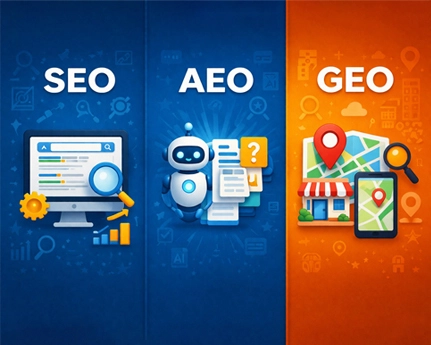
GEO vs. SEO : What is the Difference?
Although they might be similar to each other, the purpose of each method of optimization varies.
1.SEO (Search Engine Optimization)
- Concentrates on ranking web pages in conventional search engines.
- Includes keywords, backlinks, and technical optimization.
- Engine optimization (answer engine)
- Optimizes featured snippets and direct answers content.
- Concentrates on the short and question-based content.
2. Generative Engine Optimization (GEO)
- Targets AI-generated responses
- Concentrates on the context and semantic significance.
Why Generative Engine Optimization (GEO) Matters
The emergence of AI search is transforming the consumption process of users. Users do not have to use numerous links, but they use instant answers.
Here’s why Generative Engine Optimization (GEO) is crucial:
- Answers by AI minimize clicks on conventional websites.
- Brands must be visible within responses generated by AI.
- Keywords are not the only things that matter in content authority any more.
- Even high-ranking content can disappear without the help of Generative Engine Optimization (GEO).
- Basic components of Generative Engine Optimization (GEO)
- Contextual Depth
AI favors content that describes the subject matter in detail as opposed to a brief outlook. - Structured Content
Make the content easier to digest by using headings, subheadings, and bullet points. - Semantic Relevance
Rather than using repetition, pay attention to meaning and associated ideas. - Authority & Credibility
AI systems will use credible sources that have valid information. - Conversational Tone
The content should correspond to the way people pose questions.

Use of AI search optimization in GEO
Generative Engine Optimization (GEO) is based on AI search optimization. It makes sure that what you write fits the interpretation and ranking process of the AI models.
This includes:
- Using natural language queries
- Responding to user intent.
- Giving direct and informative answers.
Best Practices: AI-Driven Content Optimization
You need to embrace AI-based content optimization techniques to be successful in this new environment.
Few content creation tips are:
- Be able to explain things clearly and concisely.
- Provide answers to commonly posed user questions.
- Avoid keyword stuffing
- Technical Optimization
- Where possible, utilize structured data.
- Ensure fast-loading pages.
- Maintain mobile responsiveness
- Content Structuring
- Be clear and use bullet points.
- Incorporate FAQs into content.
- Divide big paragraphs into readable parts.
Difficulties with Generative Engine Optimization (GEO)
Although Generative Engine Optimization (GEO) represents enormous opportunities, it is also associated with challenges:
- Loss of traffic to the websites because of direct responses.
- Impossibility to follow AI-driven impressions.
- The AI algorithms keep on changing.
Future of Generative Engine Optimization (GEO)
The search for the future is conversational, smart, and AI-based. As AI keeps on developing:
- The results of the search will be more customized.
- There will be more voice and chat-based queries.
- The quality of content will take precedence over quantity.
Conclusion
The digital landscape is changing with the transition of old search to AI-generated answers. The answer lies in Generative Engine Optimization (GEO) to remain relevant in this new age. With the emphasis on user-centric, meaningful, and structured content, businesses can be seen in the search experiences powered by AI.
To future-proof your digital presence and conquer the changing search ecosystem, it is all a matter of partnership with experts.Pro Element Creatives is the most suitable performance marketing agency in Kerala, which assists the brands to adjust, streamline, and expand in the era of artificial intelligence search.
Related articles