
How Website Speed Affects User Experience and SEO?
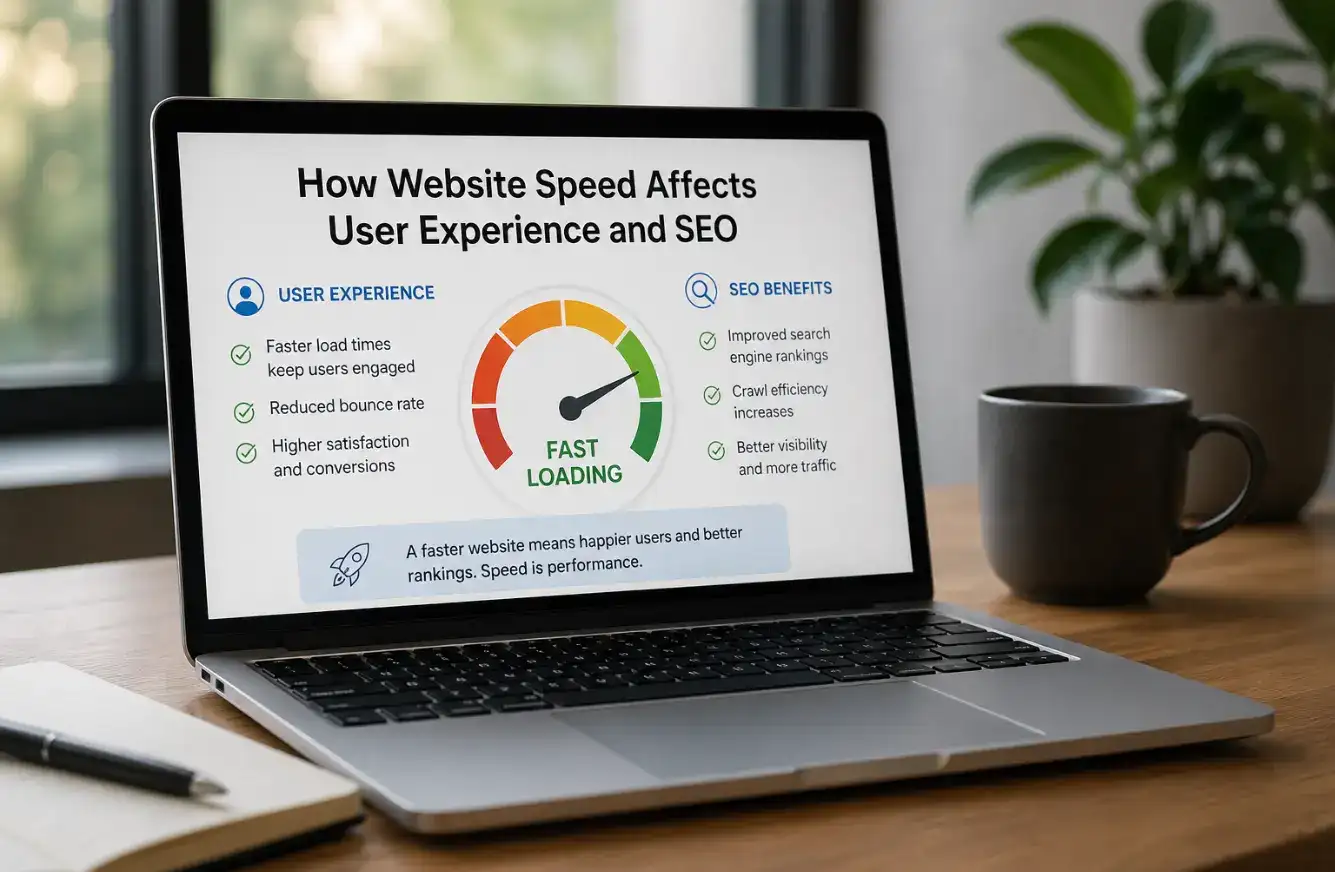
What’s your attention span? Surely it will be very less right? So how can you expect your customer to wait seconds or minutes to get logged in to your website? When one clicks on your site, they have a right to have it loaded in almost no time, and when it does not, chances are that the user will have left before even reading what you have to offer. This is where the speed of the websites and SEO apply. A website that loads quickly is no longer a technical benefit but a vital aspect that affects user experience, search ranking, and eventually a thriving business
Now, we are going to examine the direct correlation between the speed of the webpage and the way users will respond to it as well as the visibility of your webpage on the search engine.
The Reason Why Website Speed is More Critical Than Ever
Consider going into a store with a door that opens after 10 seconds. Most likely you would walk off. The same rule is applicable on the internet. The first impression users have about your brand is your page load time.
A fast-loading site feels trustworthy, professional, and user-friendly. Conversely, websites that are slow cause frustration and doubt. Users start doubting the integrity of your business, despite your product or service being outstanding.
User satisfaction is also a priority of search engines such as Google. It means that faster websites will have more advantages in terms of their ranking, and slow websites will have difficulties.
The Relationship Between Fast Website Speed and SEO
Speed is a ranking factor, and this has been made clear by Google. However, the connection between the speed of websites and SEO is more than mere algorithms.
A faster site is an improvement of key performance metrics such as the following:
- Lower bounce rate
- Increased mean session time.
- Better crawl efficiency
As users have increased time and engagement, search engines view this as a good indicator. It informs them that your site is useful and important, which increases your ranking opportunities.
Moreover, bots of search engines are able to search websites that can be crawled more effectively. This implies that you will have your pages indexed faster, thus increasing your visibility in search results.
Page Load Time: The Silent Conversion Killer
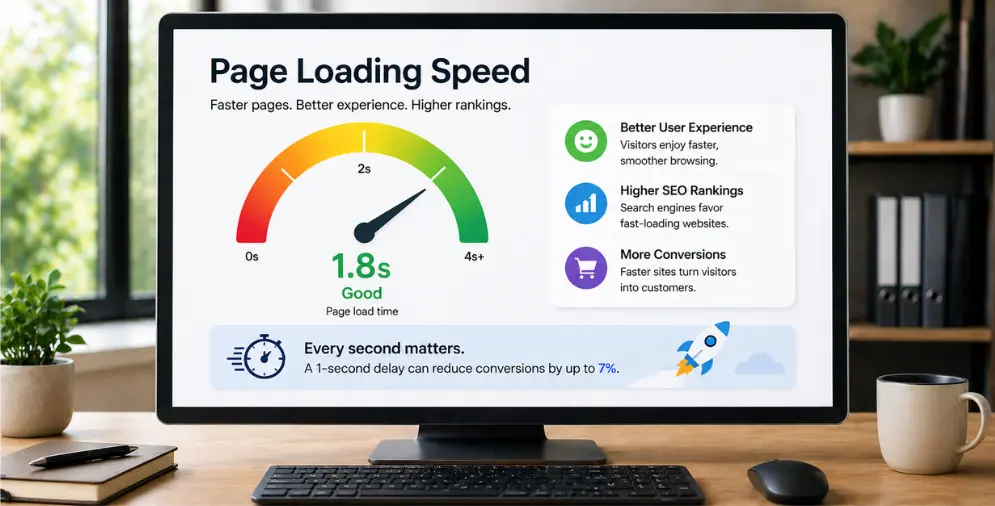
Directly affecting conversions is your page load time. Even a few seconds can cause a major drop in the user engagement level.
Research has always indicated that users will want a site to load in 2-3 seconds. More than this increases the chances of abandonment. To eCommerce websites, this may translate to lost sales. In the case of a service-based business, it may translate to lost leads.
Consider it: a landing page should not be loaded too slowly; otherwise, users might not even see your offer. Your performance gets sluggish and makes all your marketing activities, advertisements, and promotions useless.
Speed is the First Step to User Experience
User experience is not simply a matter of design or content but rather begins with the speed of your site. Smooth interaction will help the user be interested in the experience and will make them want to keep exploring.
A quick site guarantees the following:
- Smooth navigation
- Immediate communication with elements
- Increased readability and interest
Users will have better confidence in your brand and make a move when they do not have to wait. This may be completing a form, purchasing, or calling your business.
Conversely, a slow website becomes irritating. Each delayed second raises the risk of dropping out by users.
Mobile Page Speed: The Game Changer
Mobile page speed has become essential, with most users browsing using smartphones. Google also uses mobile first indexing, which means that it will rank your website based on its mobile version.
Mobile users tend to be mobile and are on slower networks than desktops. This further makes speed more significant. A site that is good on a desktop may fail miserably on a mobile platform and lose a large part of the audience.
Mobile optimization will provide:
- Quick loading on low bandwidth
- Enhanced usability with smaller screens
- Increased participation by mobile users
When your mobile site is not optimized, then you are not only losing traffic; you are also losing opportunities.
Quickly Loading Website Advocacy to Companies
A quick site is not only a benefit in terms of ranking; it is a business enhancer. The benefits of the fast-loading website are both short-term and long-term.
A faster site increases user confidence. A responsive and reliable website will be interacted with more by people. This will increase the conversion rates and customer retention.
Speed is also beneficial as far as SEO is concerned because you will have better chances of ranking better and, hence, more organic traffic. It is also effective in enhancing the performance of the paid campaigns since landing pages take a shorter time to load and have fewer bounces.
Put simply, speed affects all customer experience steps, including discovery and conversion.
The Benefits of Page Speed Optimization
To increase the speed of the website, it needs to be strategic. Page speed optimization aims at minimizing the load time and improving the cross-device performance.
This includes image optimization, code minimization, caching, and efficient hosting services. These might be technical, but their effects are very tangible.
The optimized website is also faster to load, and it performs well in bursts of traffic. It is particularly relevant when there is a campaign or during peak seasons when there is high user activity.
Optimization is not a task that is completed once; it is a continuous process. Your website expands, and it is necessary to maintain performance by ensuring that it is fast.
Speed and Brand Perception
The speed of websites also determines the perceptions the users have about your brand. A rapid site is an indication of professionalism, efficiency, and reliability.
Conversely, a sluggish site may render even a time-tested brand outdated or unreliable. This may be a significant drawback in competitive markets.
The potential customers are likely to interact with your site first. Making sure that it loads fast gives the whole user experience a tone.
Top Five Website Slowing Down Errors
Several websites do not cope with speed because of preventable problems. Among the culprits are heavy images, unoptimized code, too many plugins, and bad hosting.Another big mistake is neglecting mobile optimization. An unresponsive or mobile-unfriendly site will just not work.
These problems can be revealed with the help of regular performance audits, making sure that your site is fast and efficient.
Summary
The speed of a website is no longer a choice; it is a necessity. The role of speed of websites and SEO cannot be underestimated, whether it comes to enhancing user experience or increasing search rankings.
A quicker site will help retain users, boost conversion, and improve the trustworthiness of your brand. It makes your marketing efforts fruitful rather than a waste of time because of its slow performance.
Speed is one of the best investments that a business can make in its quest to expand on the online platform.
We realize the significance of performance-based online strategies at Pro Element Creatives. Being one of the top performance marketing firms in India, we assist the brands to optimize their websites, enhance their speed, and record quantifiable growth in both user experience and search engine results.
Related articles