
What is Paid Advertising in Digital Marketing?
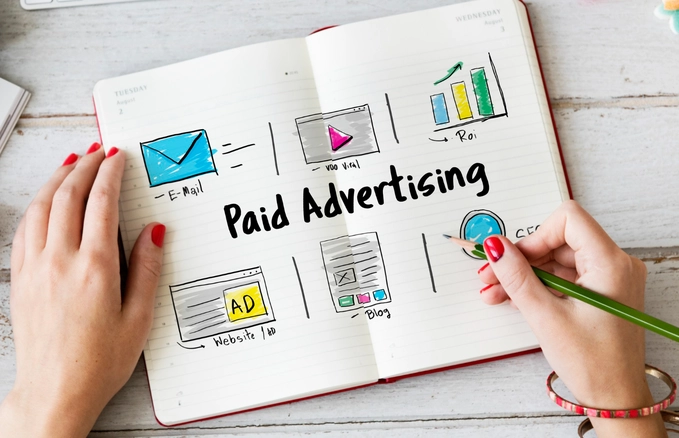
It is no longer sufficient to possess organic reach. Brands desire visibility faster, instant traffic, and quantifiable growth. That is where paid advertising comes in to play a heroic role.
Paid advertising is a good investment in all businesses, whether a startup or an established business, which will assist in reaching the right audience at the right time and, most importantly, get some results that can be measured.
What Is Paid Advertising?
Paid advertising refers to the form of digital marketing where companies pay search engine companies such as Google or social networks such as Facebook, Instagram, LinkedIn, or YouTube to advertise their products or services. You do not wait to have organic traffic but pay to have your message placed in front of your target market.
It can appear as:
- Search ads on Google.
- Place banner advertisements on online websites.
- Social media sponsored advertisements.
- YouTube video ads.
- Shopping ads
- Retargeting ads
Paid advertising is primarily intended to generate traffic, leads, or sales in the most efficient way possible in the shortest amount of time.
What Is the Importance of Paid Advertising?
Paid advertising provides instant visibility. SEO also requires time, but paid campaigns can begin creating traffic within the same day they are activated.
This is the reason why the business depends on paid advertising:
- Real-time traffic and accelerated results
- Extremely focused selection of the audience
- Complete budget and ad spend control
- Determinable performance indicators
- Scalable growth
Paid advertising, when done properly, is a reliable cash generator.
Paid Advertising and How it Works?
Paid advertising is based on bid systems. You decide on who to advertise to, how much to spend, and how to bid on placements. Upon matching with your targeting criteria, your ad will be displayed to these users.
The majority of platforms are based on pay-per-click. It is that you pay only when somebody clicks on your advertisement. This renders it cost-effective since the engagement does not merely need visibility but cost.
Indicatively, in Search Engine Marketing (SEM), companies are bidding on keywords of their services. The ad is placed at the top of the search results when one enters that keyword.
Search Engine Marketing (SEM)
Search Engine Marketing (SEM) is also a type of paid advertising in which companies advertise their websites using paid search results.
SEM ads are advertisements; when you go to Google, the results have markings that read "sponsored."
SEM helps businesses:
- Capture high-intent users.
- Target specific keywords.
- Compete with bigger brands.
- Drive ready-to-buy traffic.
It is among the most successful forms of paid advertising since it focuses on users who are in the process of solutions.
Pay-Per-Click (PPC)
Pay-Per-Click (PPC) is a type of paid advertising where the advertiser would only pay a per-click fee on their ad. You do not pay to be impressed but rather to act.
PPC campaigns can run on:
- Google Ads
- Facebook Ads
- Instagram Ads
- LinkedIn Ads
- YouTube Ads
PPC allows businesses to control daily budgets, break or scale campaigns at any time, and track clicks, conversions, and cost per result. PPC is marketing based on performance since you are only charged when somebody interacts.
Spending on Paid Advertising
There is no fixed amount. Ad spend will vary according to your objectives, industry, competition, and target audience.
A small local business can begin with an average budget, whereas a large e-commerce brand can spend a lot of money on paid advertising to occupy the market.
It is not what you spend that is important, but how well you spend that ad spend.
Smart advertisers:
- Test small budgets first.
- Optimize based on data.
- Scale winning campaigns.
- Stop underperforming ads.
Paid advertising is elastic, and that is why it is available to both big and small businesses. What are the measures of success in paid advertising? Paid advertising is being measured using clear performance metrics.
The following metrics are important:
- Click-through rate (CTR)
- Cost per click (CPC)
- Conversion rate
- Cost per acquisition (CPA)
- Return on Ad Spend (ROAS)
- One of the most significant indicators is Return on Ad Spend (ROAS), among others.
What Does Return on Ad Spend (ROAS) Mean?
Return on Ad Spend (ROAS) is the ratio of revenue that you get per dollar of ad spend.
- Know the profitability of the campaign.
- Allocate budgets better.
- Scale successful campaigns.
- Improve marketing strategy.
Unless you are measuring ROAS, you are just spending money, and you do not know whether it is actually working.
Are Paid Advertisements Superior to Organic Marketing?
There is a place for paid advertising as well as organic marketing. Organic marketing is long-term brand trust and visibility. Paid advertisement will provide swift outcomes and accurate targeting.
A combination of the two is the most suitable strategy:
- Use SEO for long-term growth.
- Paid advertising should be used to generate immediate traffic and conversions.
- The combination of them forms an immense marketing ecosystem.
What are the Forms of Paid Advertising?
Today there are several varieties of paid advertising methods. To run ads, one can choose any of these or multiple methods to drive leads. They are:
1. Search Ads
Be listed on search engines with Search Engine Marketing (SEM).
2. Display Ads
Banner advertisements on websites and applications.
3. Social Media Ads
Posting ads on such networks as Facebook, Instagram, LinkedIn, and Twitter.
4. Video Ads
Advertisements placed at the beginning or in between YouTube videos.
5. Retargeting Ads
Ads that will be displayed to people who have already visited your site.
Both styles are used differently according to your marketing goal.
Who is the Recipient of Paid Advertising?
The audience for a paid advertisement is diverse, and it is critical to target them strategically.
Paid advertising is also suited to:
- New products started by startups
- E-commerce brands
- Service-based businesses
- Local businesses
- B2B companies
- Event promotions
Paid Advertising & Common Mistakes
Most companies squander money on ad spending due to a lack of good strategy.
Common mistakes include:
- Not defining clear goals.
- Neglecting to target the audience.
- Not tracking conversions
- Providing more emphasis on clicks and less on sales.
- Failure to optimize campaigns on a regular basis.
- Effective paid advertising takes tests, analyses, and improvement.
What to do to increase the performance of paid advertising. Let's see what improves the results.
- Define clear objectives.
- Target the right audience.
- Recruit powerful ad copy and creatives.
- Monitor performance daily.
- Optimize based on data.
- Develop the emphasis on Return on Ad Spend (ROAS).
It is not only about spending money on paid advertising. It is about being a strategic investor.
The Future of Paid Advertising
One of the most effective digital marketing tools is paid advertising. It provides businesses with quickness, volume, precision in targeting, and quantifiable outcomes. With paid advertising, whether it is Search Engine Marketing (SEM) or Pay-Per-Click (PPC) campaigns, a brand will grow at a rate higher than when using organic advertising methods.